
Your team uses software. Yet somebody copies information between systems, searches for information, checks the missing details on the same request, or prepares the reports at the end of the month.
Adding another tool helps to automate some of the processes, but a bespoke solution is developed for the organization’s data, decision rules, and connected systems.
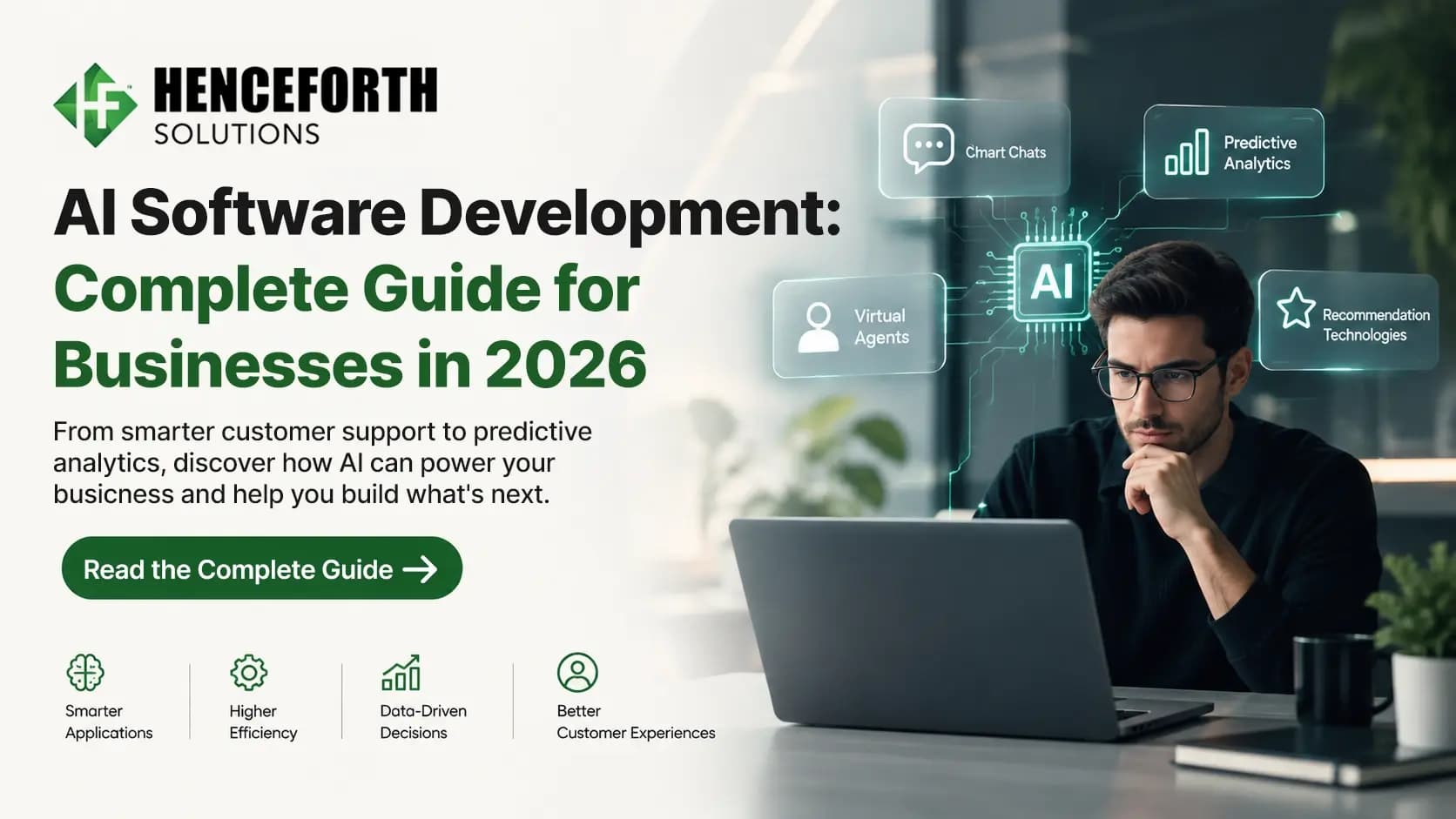
Custom AI solutions for businesses are built to fulfill the requirements of the particular task, information, users, and permissions.
A solution can train a model to learn how to assist someone in finding the right information in the product documentation, extract relevant details from submitted files, or compile account summaries from the CRM data.
Custom development is not necessarily training from scratch as the task may have an existing model, data filtering and transformation software, access permissions, and an interface to organize the information.
A customization builds on existing solutions, their organization-specific data, and the additional rules. For instance, a documents-processing assistant has an application programming interface (API) to indicate the document type, review if all necessary fields were filled, and route an incomplete request to a worker.
Custom AI solutions provide the appropriate tools for the tasks, but what makes them useful is the combination of elements.
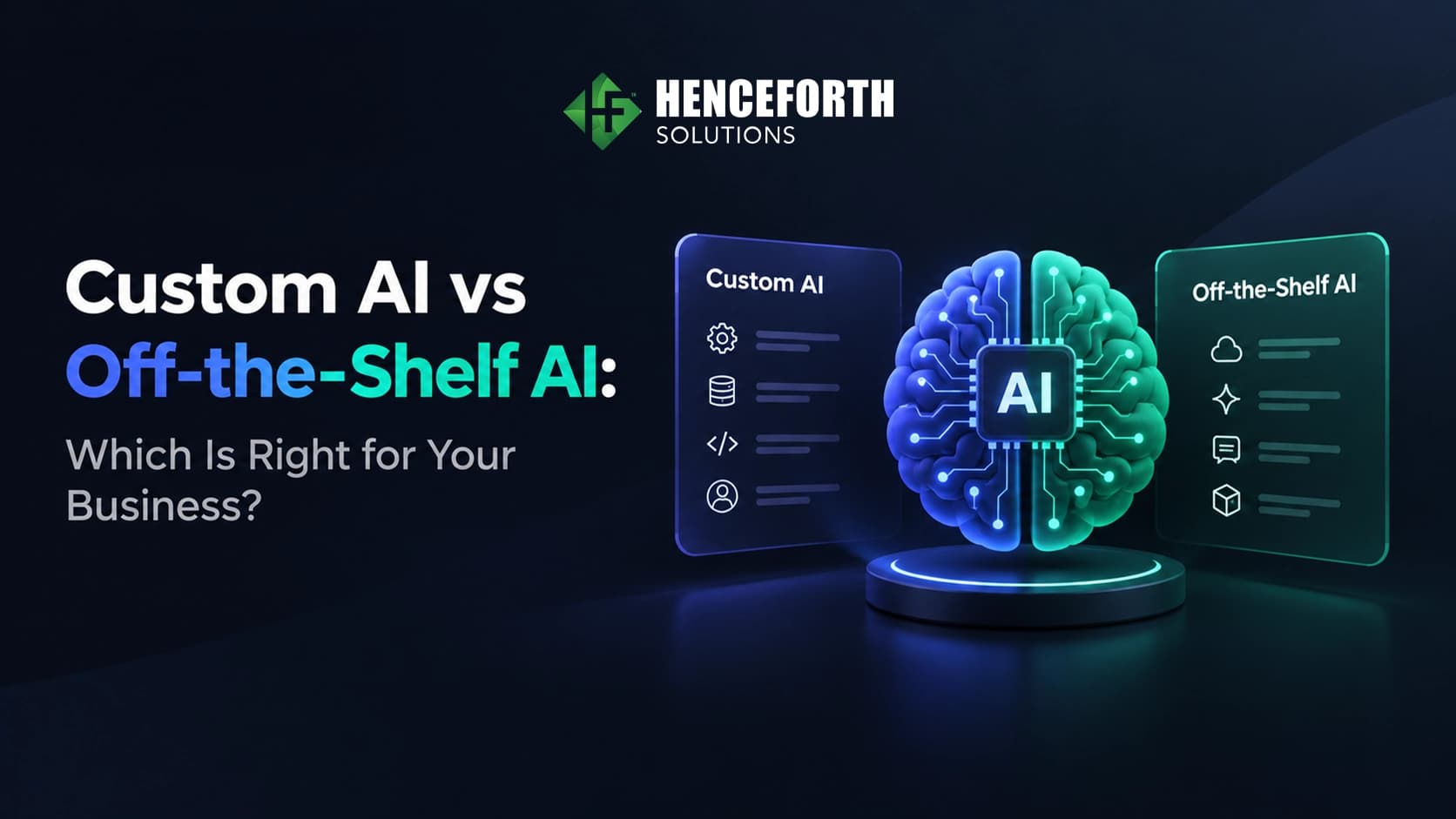
When do off-the-shelf AI tools suffice?
There is no point in custom development if a readily available application can fulfill the requirements, connect to the necessary documents, and have the correct permissions.
It means that some existing products are appropriate for sporadic use, tasks that require only a few documents, and additional automation that goes beyond the initial task.
Before a company requests a custom AI solution, the following considerations must be made:
Would an existing product be sufficient to complete a task?
Does it have the data, tools, and integration to fulfill the requirements?
Are there sufficient permissions and approval rules for the task?
What additional activities require manual completion after the application fulfills its task?
How do an existing product and custom development compare in terms of overall cost to accomplish the task?
The custom AI tools become necessary when the requirements are either not fulfilled or need extensive modification to be appropriate for the organization.
A consideration compares existing integration and the scope of automation with the proposed custom solution.
Where can custom AI solutions help the business?
The following five cases illustrate applications rather than proven outcomes.
Internal knowledge and support
Support team members refer to the product documentation, account details, and similar requests before responding to questions or problems.
An AI application can pull the relevant information, prepare a response, and indicate the sources of data.
Where the information is missing or contradictory, it can flag the resolution for human review and compilation.
Such an application has to justify the time and effort based on the accuracy of preparation and the reduction of support-time spent on a query.
Sales enquiry and CRM administration
Enquiries come in through various means – filled forms, emails, and discussions with the sales team.
Administrative personnel review the request, clarify the intent and contents, and update the customer relationship management (CRM) application.
An application can extract the relevant details, highlight missing or insufficient information, prepare a draft record, and summarize related interactions for the sales representative to review before responding.
Any modifications to the agreement terms and pricing structures remain subject to approval in accordance with the company’s rules for sales.
Processing documents and operations
Invoices, purchase orders, and onboarding requests go through a series of checks before being approved for payment or recording in the systems.
A custom solution extracts essential information, reviews the contents against the criteria, and highlights any missing or inappropriate entries before sending it to the reviewer.
Where the review process includes repeated edits and approvals, a solution only reduces the overall effort when it becomes significantly faster than the manual edits.
Forecasting and recommendations
In certain cases, sufficient historical information is available for developing a recommendation engine or generating forecasts.
A retail company, for instance, can review product availability forecasts based on location, sales trends, and similar considerations.
The recommendation should be reviewed against a set of historical data before implementing the algorithm in wider forecasts.
Such an engine is only appropriate where the accuracy of the results is reasonable given the volume and accuracy of the input information.
Activities in the wider business context
A series of actions take place in wider business contexts ranging from a single task within an organization to customer relationships, supply chains, and business planning.
AI agents coordinate multiple activities from within the application, but they are only valuable within the constraints of the user roles.
The guide to AI agent use cases for business provides additional insight into automating single tasks through to wider business functions.
Is the investment in custom AI development appropriate?
Custom development for businesses is appropriate when a repetitive and expensive activity has an outcome that can be measured.
It ceases to be so where the task is rare, the resulting information is inconsistent or inaccurate, or the reviewer spends as much time correcting it as when completing the task manually.
Custom development can be initiated by recording an activity, asking a few specific questions, and comparing the results.
Document the activity
It helps to establish the scale of the task, its frequency, and whether it can be appropriately automated or made more efficient.
How many requests or tasks are made?
How long does a single task take to complete?
What proportion of attempts are completed or abandoned due to an error or inaccuracy?
What does the correction or approval process consist of?
What elements of processing require human judgement?
The outcome and efficiency of custom development need to be compared against the current system or manual process.
The cost and benefit
Where the custom application reduces time or resource expenditure on a task, it offsets its implementation and operational cost.
In another scenario, 1,000 monthly requests where an activity takes 12 minutes a day on average reduce to 8 minutes.
It reflects an increase in capacity of approximately 67 hours per month.
Such figures are only relevant when there is capacity to utilize them rather than a direct reduction in expenditure, unless overtime or additional headcount is eliminated as a result.
Time is not the only factor in processing accuracy as a task that is faster but significantly more error-prone may require more resources to correct.
The guide to AI software development costs elaborates on additional considerations.
What does custom AI application development entail?
Custom application development implements an AI component in a program that can be used by the employees or the customers.
The development includes the software interface, connection to the required documents and databases, preparation and execution rules, software tools, user authentication, and system monitoring procedures.
An employees-only note-taking and photograph-taking application, for instance, generates a report for the reviewer.
It does so by having an AI element within the wider software application.
When comparing artificial intelligence development solutions for businesses, bear in mind that a model demonstration does not encompass the entire application and its interactions with document systems, user permissions, and other tools.
Getting started with custom AI development
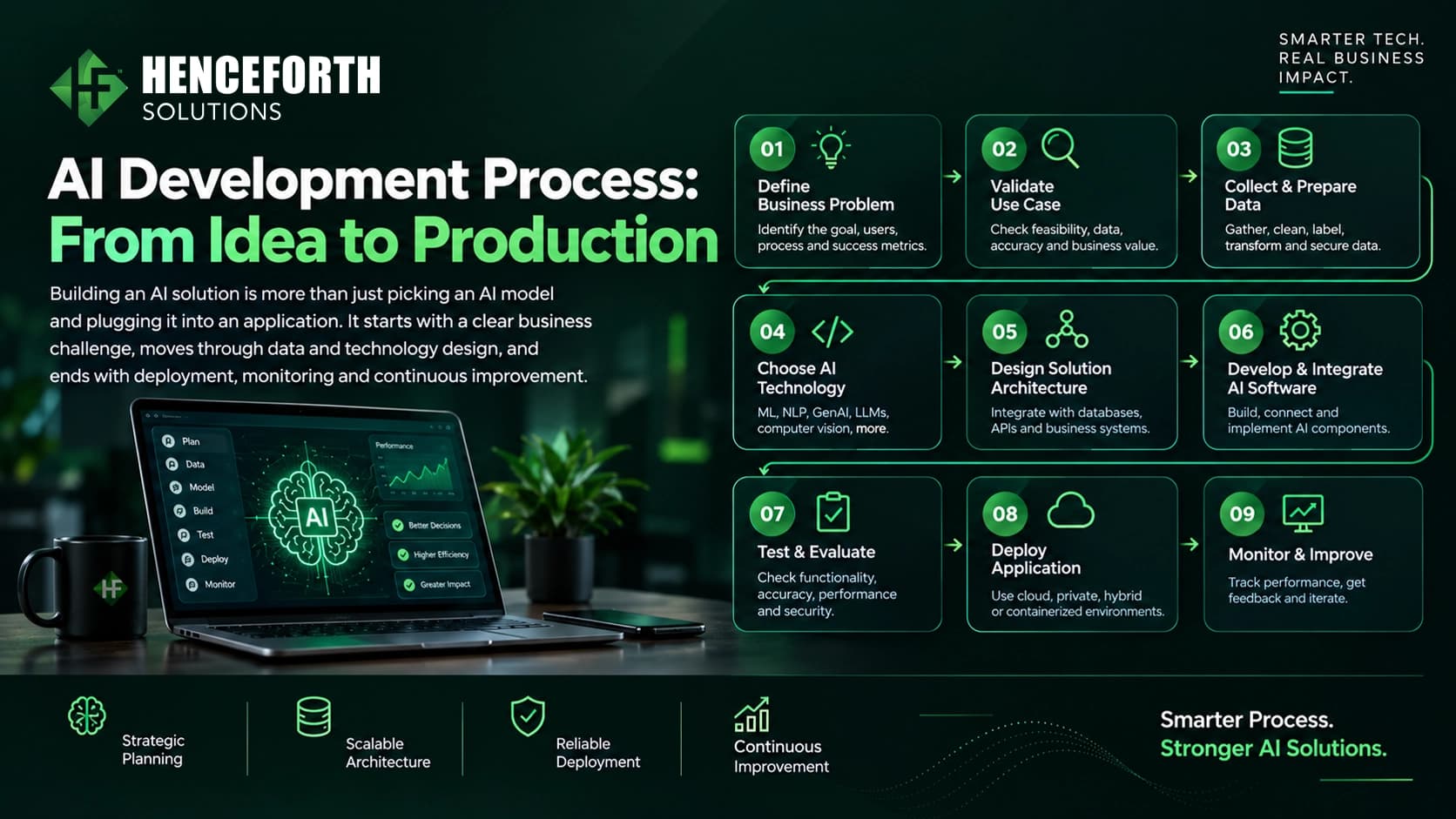
1. Choose one business problem to resolve
The beginning is with a task that requires modification.
“Reducing the average time spent preparing enquiries for sales review” provides a clear objective for the developers to understand.
“Improving our business with AI” is a comprehensive statement that requires further discussion to evolve into a defined task.
Should the initial understanding be unclear, AI consulting assists in reviewing the current system and identifying the opportunities for its modification.
2. Choose a measurable outcome
Defining what a successful outcome looks like is necessary before beginning the work.
It may be few incomplete or erroneous records, lower average document-preparation time, or other similar indicators.
The current state is necessary for comparison.
3. Review the data and integration options
Defining the information that the application needs to process and its current state informs the next steps.
A review of the documents and the systems that hold them identifies the current state of the data.
Integration with other documents, systems, or approvals may also be necessary.
Where the documents are inconsistent, incomplete, obsolete, or inaccessible, custom AI application development is no longer viable unless those issues are resolved.
For wider business contexts, AI integration services provide guidance on what options exist.
4. Build a focused pilot
Representatives across the necessary business functions provide examples of typical requests as well as the outliers, errors, and failures.
It informs the development process as the application may need to recognize and respond to those exceptional cases.
OpenAI’s evaluation best practices advocate for task-specific tests and examples, including typical and extreme cases.
5. Define roles, permissions, and approvals
Setting rules, access rights, and approval limits within the software is essential.
Determining what the AI can read, draft, edit, and send informs the wider process.
Producing a response is one matter, but submitting it for approval is a function that requires separate instructions.
NIST AI Risk Management Framework is a voluntary guideline that covers considerations in developing and utilizing AI applications within the business context.
6. Launch and optimize the application
Launching the new solution is only the beginning of the process.
Monitoring provides insight into the accuracy of results, corrections by the reviewers, ongoing expenses, and appropriate adjustments for the application to provide sufficient results.
Where the application performs adequately, expanding the scope is an option although the initial review should provide evidence for continued investment.
Should the trial results show that the new solution does not support business needs, the evidence informs the choice to halt the project or reconfigure it.
For additional information on the sequence of events, the AI development process guide describes the stages of implementation in more detail.
How to choose the custom AI development company
A company that provides custom AI development for businesses has to be able to explain how the new application fits within the context of the organization.
It is advisable to ask questions before beginning the collaboration.
What elements of the process can be supported by AI?
Can an AI tool replace a business function or does it require existing software?
What data would the team provide?
How will the accuracy and instructions-following ability be tested?
What happens if a model fails to produce the expected results or an integration becomes unavailable?
Who owns the application programming code, accounts, and documentation?
What support and ongoing costs can be expected?
Relevant samples and references with clear indications of the results are informative.
Where a company provides figures for the turnaround time or accuracy, it is reasonable to request additional information on what exactly was tested and what manual work was performed.
A suitable project specification describes the extent of the application, assumptions, liabilities, and acceptance criteria.
Finding the right starting point for the business
The initial discussion on the use of artificial intelligence in businesses focuses on the inefficiencies that AI can address.
One specific business function provides sufficient scope for an initial assessment rather than attempting to automate entire departments at once.
Henceforth Solutions offers custom AI development services to businesses exploring the possibility of custom applications and automation options.
Describe the task, the software that the team uses, and the desired outcome to begin the discussion on the feasibility, scope, and cost of custom AI development.